
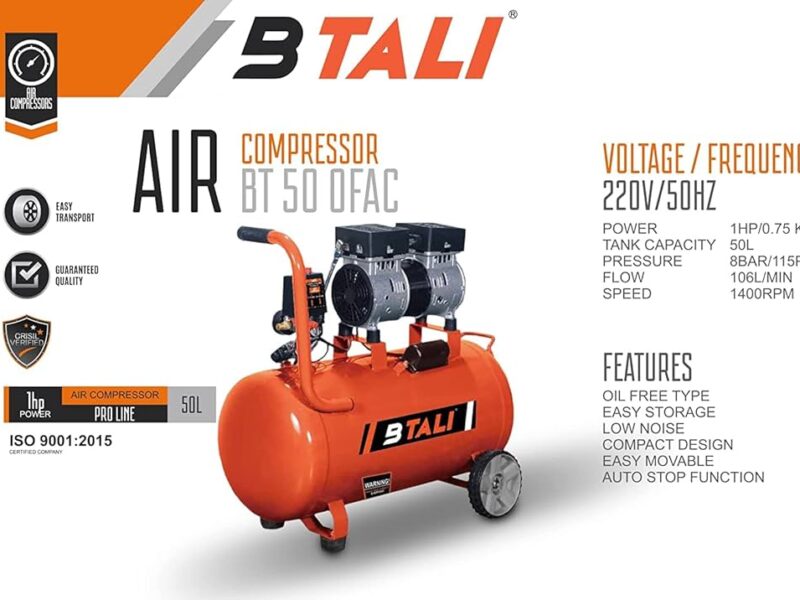
The backbone of any efficient and productive automotive repair shop isn’t just the skilled mechanics and technicians, it’s also the reliable, powerful air compressor. At Btali International, we understand the critical role these machines play. Without a dependable air compressor, many essential tasks would be impossible, time-consuming, or simply less effective. This blog will delve into the numerous ways air compressors are indispensable in automotive repair shops, highlighting the different types available and why choosing the right one is crucial.
The Power Source: Why Every Automotive Shop Needs an Air Compressor
The modern automotive repair shop relies heavily on pneumatic tools and equipment. These tools, powered by compressed air, offer significant advantages over manual alternatives, including increased speed, power, and precision. From tightening bolts to spray painting, the air compressor is the central power source.
Essential Applications of Air Compressors in Automotive Repair
Here are just some of the ways air compressors are used daily in automotive repair:
- Pneumatic Tools: Impact wrenches (which can require 3 to 12 CFM depending on size), ratchets, drills, and sanders are all powered by compressed air. These tools allow mechanics to quickly and efficiently perform tasks like removing lug nuts, loosening bolts, and preparing surfaces for painting. The right air compressor makes these tools work like a charm.
- Spray Painting: Achieving a flawless paint finish requires a consistent and reliable source of compressed air. Air compressors, especially those designed air compressor for painting, provide the necessary pressure and flow (often requiring 6-12 CFM) for spraying primers, paints, and clear coats. The quality of the air compressor and its filtration directly impacts the quality of the paint job.
- Lifting Equipment: Hydraulic lifts, often used for raising vehicles, often incorporate pneumatic systems for ease of operation (requiring around 6.0 CFM). Air compressors power these systems, allowing mechanics to safely and efficiently access the undercarriage of vehicles.
- Tyre Inflation: Maintaining proper tyre pressure is crucial for safety and fuel efficiency. Air compressors are used to inflate tyres to the correct pressure (up to 150 PSI). A car tyre air pump functionality is thus embedded in many automotive air compressor designs.
- Cleaning and Drying: Compressed air is ideal for cleaning parts, drying surfaces, and removing debris (blow guns require about 2.5-5.0 CFM) from hard-to-reach areas. This is especially important after cleaning with solvents or degreasers.
- Specialty Tools: Many specialized automotive tools, such as brake bleeders and fluid extractors, rely on compressed air for their operation. These tools streamline complex tasks and improve efficiency.
Choosing the Right Air Compressor: Considerations for Automotive Repair Shops
Selecting the right air compressor for an automotive repair shop is a critical decision. Several factors need to be considered to ensure that the chosen air compressor can meet the demands of the shop:
- Air Delivery (CFM): Cubic feet per minute (CFM) measures the volume of air the air compressor can deliver at a specific pressure (typically 90 PSI for tools). This is perhaps the most important factor. To calculate your total requirement, add the CFM of the tools you plan to use simultaneously and choose a compressor that exceeds this value. For example, a shop that frequently uses a 1/2″ impact wrench (4.0 CFM) and a body polisher (20.0 CFM) at the same time would need a CFM well over 24.0 CFM.
- Tank Size: The tank size determines how much compressed air the air compressor can store. A larger tank provides a more consistent airflow and reduces the frequency with which the air compressor needs to cycle on.
- Horsepower (HP): Horsepower is a measure of the air compressor’s motor power. Higher horsepower typically translates to faster recovery times and the ability to operate larger tools.
- Power Source: Air compressors are typically powered by electricity or gasoline. Electric air compressors are more common in automotive repair shops due to their quiet operation and lack of emissions.
- Type of Compressor: There are several types of air compressors available, each with its own advantages and disadvantages:
- Reciprocating (Piston) Compressors: These are common for small to medium-sized shops or for intermittent use. They are inexpensive and easy to maintain but have a lower duty cycle (often 50% or less), are noisier, and produce a pulsating airflow.
- Rotary Screw Compressors: These are typically used in larger, busy shops with high, continuous air demands. They are more expensive upfront but offer 100% duty cycle (can run all day), quieter operation, lower long-term maintenance costs, and a longer lifespan.
- Oil-Free Compressors: An oil free air compressor offers cleaner air and reduces the risk of oil contamination. They are ideal for applications where air purity is critical, such as spray painting and some specialized diagnostic tools.
- Portability: While many automotive shops have stationary air compressors, a portable air compressor can be useful for mobile repairs, roadside assistance, and smaller jobs.
Oil-Free vs. Oil-Lubricated Air Compressors: What’s the Difference?
One of the key distinctions in air compressor technology is between oil-free and oil-lubricated models. While both types serve the same fundamental purpose, their internal mechanisms and suitability for different applications vary significantly.
- Oil-Lubricated Air Compressors: These air compressors use oil to lubricate the moving parts. The oil reduces friction, minimizes wear and tear, and extends the lifespan of the air compressor, making them suitable for heavy-duty, continuous operation. They are generally quieter and more durable but require regular oil changes and maintenance.
- Oil-Free Air Compressors: These air compressors use coated cylinders (like Teflon) and sealed bearings to reduce friction without oil in the compression chamber. This eliminates the risk of oil contamination, making them **ideal for applications where air purity is paramount (e.g., spray painting, food processing, medical).** They are lighter, require less maintenance (no oil changes), but may have a shorter lifespan and can be noisier (though modern models are improving).
Btali International offers both Oil-Free and Oil-Lubricated Compressors.
Importance of Air Quality in Automotive Repair
The quality of the compressed air is just as important as the volume and pressure. Contaminated air can damage tools, affect paint finishes, and compromise the quality of repairs. To ensure clean and dry air, consider using air filters, regulators, and refrigerated air dryers in your air system. These accessories remove moisture, oil, and other contaminants from the air supply—a non-negotiable step for a high-quality paint booth.
Heavy Duty Air Compressor Price: Understanding the Investment
Investing in a heavy duty air compressor is a significant expense for any automotive repair shop. The heavy duty air compressor price varies depending on several factors, including size, horsepower, CFM, tank capacity, and brand. While it may be tempting to opt for a cheaper model, it’s important to consider the long-term costs of maintenance, repairs, and potential downtime. A higher-quality air compressor may have a higher upfront cost, but it will often pay for itself in the long run through improved efficiency, reliability, and longevity.
When researching heavy duty air compressor price, consider:
- Brand Reputation: Established best air compressor brands like Quincy, Kaeser, Atlas Copco, and Ingersoll Rand (and those offered by Btali International) generally have a reputation for quality and reliability in the industrial and commercial automotive space.
- Warranty: A longer warranty can provide peace of mind and protect your investment.
- Availability of Parts and Service: Ensure that replacement parts and service are readily available in your area.
Maintenance for Longevity: Keeping Your Air Compressor Running Smoothly
Proper maintenance is essential for prolonging the lifespan of your air compressor and ensuring its optimal performance. Regular maintenance tasks include:
- Draining the Tank: Condensation can accumulate in the tank, leading to rust and corrosion. Drain the tank daily to remove moisture.
- Checking and Changing the Air Filter: A clogged air filter can reduce the efficiency of the air compressor. Clean or replace the air filter as needed.
- Checking for Leaks: Inspect the hoses, fittings, and connections for leaks. Repair any leaks promptly to prevent air loss.
- Lubricating Moving Parts: If you have an oil-lubricated air compressor, check the oil level regularly and change the oil according to the manufacturer’s recommendations.
- Cleaning the Compressor: Keep the air compressor clean and free of dust and debris.
Btali International: Your Trusted Air Compressor Partner
At Btali International, we offer a wide range of air compressors to meet the needs of any automotive repair shop. Whether you need a portable air compressor for mobile repairs or a high pressure air compressor for heavy-duty applications, we have the perfect solution for you. We are a leading air compressor distributor, committed to providing our customers with high-quality products, competitive prices, and exceptional customer service. Our selection includes models perfect for the air compressor for industrial use scenario as well.
We understand that choosing the right air compressor can be a daunting task. That’s why our team of experts is always available to provide guidance and assistance. We can help you assess your needs, compare different models, and select the air compressor that’s right for your shop. We also offer comprehensive maintenance and repair services to keep your air compressor running smoothly for years to come.
The Future of Air Compressors in Automotive Repair
The role of air compressors in automotive repair is likely to continue to evolve as technology advances. We can expect to see Variable Speed Drive (VSD) rotary screw air compressors becoming more common. These are highly energy-efficient as they can slow down and speed up in real-time to match the air demand, which is crucial in a shop with intermittent tool use. These air compressors will also be equipped with sensors and controls that optimize performance and reduce energy consumption. They will also be integrated with diagnostic systems that can detect and prevent potential problems.
As the automotive industry continues to evolve, Btali International will remain at the forefront of air compressor technology. We are committed to providing our customers with the latest and greatest innovations in air compressor technology, helping them stay ahead of the curve and operate their shops more efficiently.
Conclusion
Air compressors are an essential tool in any automotive repair shop. They power a wide range of tools and equipment, enabling mechanics to perform their jobs quickly, efficiently, and safely. Choosing the right air compressor is a critical decision that can impact the productivity and profitability of your shop. By considering the factors outlined in this blog, you can select the air compressor that best meets your needs and ensures that your shop is equipped to handle any job. And remember, Btali International is here to help you every step of the way, from selecting the right air compressor to providing ongoing maintenance and support. For all your air compressor needs, trust Btali International – your reliable partner in automotive excellence. Remember to consider the application, if you are going to be doing a lot of painting ensure you purchase the correct Air compressor for painting. By considering these factors, your Automotive shop will be more productive.