Navigating the Risks: Selecting Industrial Vacuum Cleaners for Hazardous Materials and Explosive Dust Environments with Btali International
The safety of your workforce and the integrity of your facility are paramount. When dealing with hazardous materials and explosive dust environments, choosing the right equipment isn’t just a matter of efficiency; it’s a matter of survival. At Btali International, we understand these critical needs, and this comprehensive guide will walk you through selecting industrial vacuum cleaners for hazardous materials and explosive dust environments, ensuring you make informed decisions that prioritize safety and compliance. This blog will cover everything from understanding the risks to choosing the right filtration and certification, all while highlighting how Btali International can be your trusted partner.
Understanding the Hazards: A Foundation for Safe Vacuuming
Before diving into specific vacuum cleaner features, it’s crucial to understand the dangers you’re facing. Hazardous materials encompass a wide range of substances, including chemicals, solvents, pharmaceuticals, and biological agents. Explosive dust environments, on the other hand, are created by combustible dusts like wood, grain, metal, and plastics. These dusts, when suspended in the air at a sufficient concentration, can ignite and cause devastating explosions.
Here’s a breakdown of the key risks:
- Dust Explosions: Fine particles suspended in the air can ignite with a spark or heat source, leading to rapid combustion and a powerful explosion. The severity depends on the dust type, concentration, particle size, and presence of an ignition source.
- Health Hazards: Exposure to hazardous materials can cause a range of health problems, from skin irritation and respiratory issues to long-term illnesses and even death.
- Static Electricity: The movement of materials during vacuuming can generate static electricity, which can act as an ignition source in explosive dust environments.
- Chemical Reactions: Some materials can react with each other or with the vacuum cleaner’s components, creating hazardous byproducts.
Selecting Industrial Vacuum Cleaners for Hazardous Materials and Explosive Dust Environments: Key Considerations
Selecting industrial vacuum cleaners for hazardous materials and explosive dust environments requires a meticulous approach. Here’s a detailed look at the critical factors to consider:
1. Certification and Compliance: The Foundation of Safety
- ATEX Certification: For explosive dust environments, ATEX (Atmosphères Explosibles) certification is essential. This European Union directive ensures that equipment used in potentially explosive atmospheres is designed and manufactured to prevent ignition. Look for vacuums specifically certified for the zone classification of your environment (Zone 1, Zone 2, etc.).
- IECEx Certification: Similar to ATEX, IECEx (International Electrotechnical Commission) is a globally recognized certification scheme for equipment used in hazardous areas.
- OSHA Compliance: In the United States, ensure the vacuum cleaner complies with Occupational Safety and Health Administration (OSHA) regulations related to hazardous materials and dust control.
- UL Listing: Underwriters Laboratories (UL) listing indicates that the vacuum cleaner has been tested and meets specific safety standards.
2. Filtration: Containing the Hazards
Effective filtration is paramount when dealing with hazardous materials and explosive dust environments.
- HEPA Filtration: High-Efficiency Particulate Air (HEPA) filters are crucial for capturing fine dust particles and preventing them from being released back into the air. Look for HEPA filters with an efficiency rating of 99.97% or higher for particles 0.3 microns in size.
- ULPA Filtration: Ultra-Low Penetration Air (ULPA) filters offer even higher filtration efficiency than HEPA filters, capturing even smaller particles.
- Cartridge Filters: These are commonly used in industrial vacuum cleaners and can be selected with specific media for different types of dust and chemicals.
- Baghouse Filtration: For high-volume dust collection, baghouse filtration systems offer excellent efficiency and can handle a wide range of particle sizes.
- Filter Shaking/Pulse Jet Cleaning: These systems automatically clean the filters, maintaining airflow and preventing clogging, which is vital for consistent performance and safety.
3. Vacuum Cleaner Type: Choosing the Right Tool for the Job
- H-Class Vacuum Cleaners: Specifically designed for hazardous materials, H-Class vacuums have non-sparking components and are grounded to prevent static electricity buildup.
- Explosion-Proof Vacuum Cleaners: These vacuums are designed to contain any potential explosion within the unit, preventing it from spreading to the surrounding environment.
- Central Vacuum Systems: For larger facilities, a central vacuum system can provide a convenient and efficient way to collect dust and debris from multiple locations. Ensure the system is properly designed and certified for the specific hazards present.
- Portable Vacuum Cleaners: Offer flexibility for spot cleaning and smaller areas. Ensure they are appropriately certified and equipped with the necessary filtration for the specific hazards.
4. Materials of Construction: Resistance to Chemicals and Corrosion
The materials used in the vacuum cleaner’s construction should be resistant to the hazardous materials it will be handling.
- Stainless Steel: Offers excellent corrosion resistance and is suitable for use with many chemicals.
- Polypropylene: A durable and chemical-resistant plastic often used for dust containers and hoses.
- Conductive Materials: Used for grounding and preventing static electricity buildup.
5. Grounding and Bonding: Preventing Static Electricity
Static electricity is a significant ignition source in explosive dust environments.
- Grounding: The vacuum cleaner should be properly grounded to dissipate static charges.
- Bonding: All conductive components of the vacuuming system, including hoses and containers, should be bonded together to prevent charge accumulation.
6. Motor and Electrical Components: Spark-Free Operation
- Explosion-Proof Motors: These motors are designed to contain any potential sparks or explosions within the motor housing.
- Intrinsic Safety: A design approach that limits the energy available in electrical circuits to prevent ignition.
- Spark-Resistant Components: Use of non-sparking materials in switches, brushes, and other electrical components.
Btali International: Your Partner in Safe Industrial Vacuuming
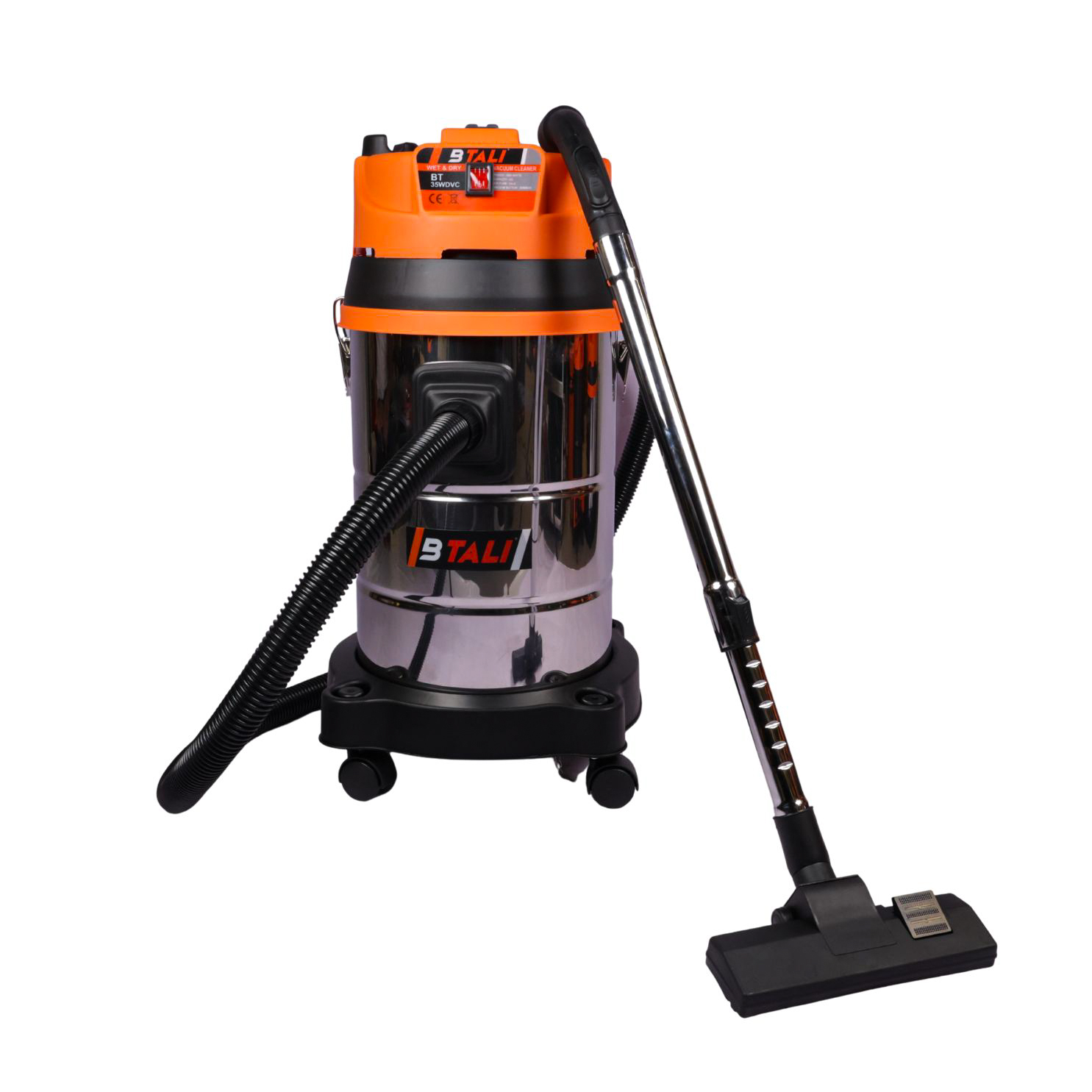
At Btali International, we specialize in providing high-quality industrial vacuum cleaners designed to meet the most demanding safety requirements. We offer a wide range of ATEX and IECEx certified vacuums, as well as custom solutions tailored to your specific needs. Our team of experts can help you selecting industrial vacuum cleaners for hazardous materials and explosive dust environments by:
- Assessing your specific hazards: We’ll work with you to identify the types of hazardous materials and explosive dusts present in your facility.
- Recommending the right equipment: Based on your assessment, we’ll recommend the most appropriate vacuum cleaner type, filtration system, and materials of construction.
- Providing training and support: We offer comprehensive training on the safe operation and maintenance of our vacuum cleaners.
- Ensuring compliance: We’ll help you ensure that your vacuuming system complies with all relevant regulations and standards.
Specific Vacuum Cleaner Features to Look For
Beyond the broad categories, consider these specific features:
- Automatic Filter Cleaning: Reduces maintenance and ensures consistent filtration efficiency.
- Variable Speed Control: Allows you to adjust the suction power to suit different materials.
- Large Capacity Containers: Minimize the frequency of emptying.
- Durable Hoses and Accessories: Resistant to chemicals and abrasion.
- Ergonomic Design: Reduces operator fatigue and improves safety.
- Remote Control Operation: Allows operators to control the vacuum from a safe distance.
- Pressure Monitoring: Alerts operators to filter blockages or other issues.
Maintenance and Best Practices for Continued Safety
Even the best vacuum cleaner requires proper maintenance to ensure continued safety and performance.
- Regular Filter Changes: Follow the manufacturer’s recommendations for filter replacement.
- Inspection of Hoses and Accessories: Check for cracks, leaks, and wear.
- Grounding Verification: Regularly test the grounding system to ensure it is functioning properly.
- Employee Training: Provide ongoing training to employees on the safe operation and maintenance of the vacuum cleaner.
- Record Keeping: Maintain records of all maintenance activities and inspections.
Btali International is committed to providing you with the tools and expertise you need to create a safe and productive work environment. Contact us today to learn more about our range of industrial vacuum cleaners for hazardous materials and explosive dust environments. We are dedicated to helping you selecting industrial vacuum cleaners for hazardous materials and explosive dust environments that meet your specific needs and ensure the safety of your workforce. Our commitment to quality and safety makes Btali International the ideal partner for your industrial cleaning needs.
Conclusion
Selecting industrial vacuum cleaners for hazardous materials and explosive dust environments is a critical responsibility. By understanding the risks, considering the key factors outlined in this guide, and partnering with a trusted supplier like Btali International, you can create a safer and more efficient work environment. Remember, safety is not just a priority; it’s a necessity.