
By Btali Technical Team · Updated 4 November 2026 · Prices checked against Btali product pages on 4 November 2026
Quick answer: A dental compressor supplies the clean, dry air that drives handpieces, the air-water syringe and chair functions. It should be oil-free, sized for the number of chairs that will run at the same time, and fitted with a tank big enough to keep pressure steady between motor starts. For a single-chair clinic, a 1 HP oil-free compressor with a 25 to 50 litre tank is the usual choice; two or three chairs need 2 to 3 HP. Btali dental compressors cost about ₹5,400 to ₹17,600, based on our product pages on 4 November 2026.
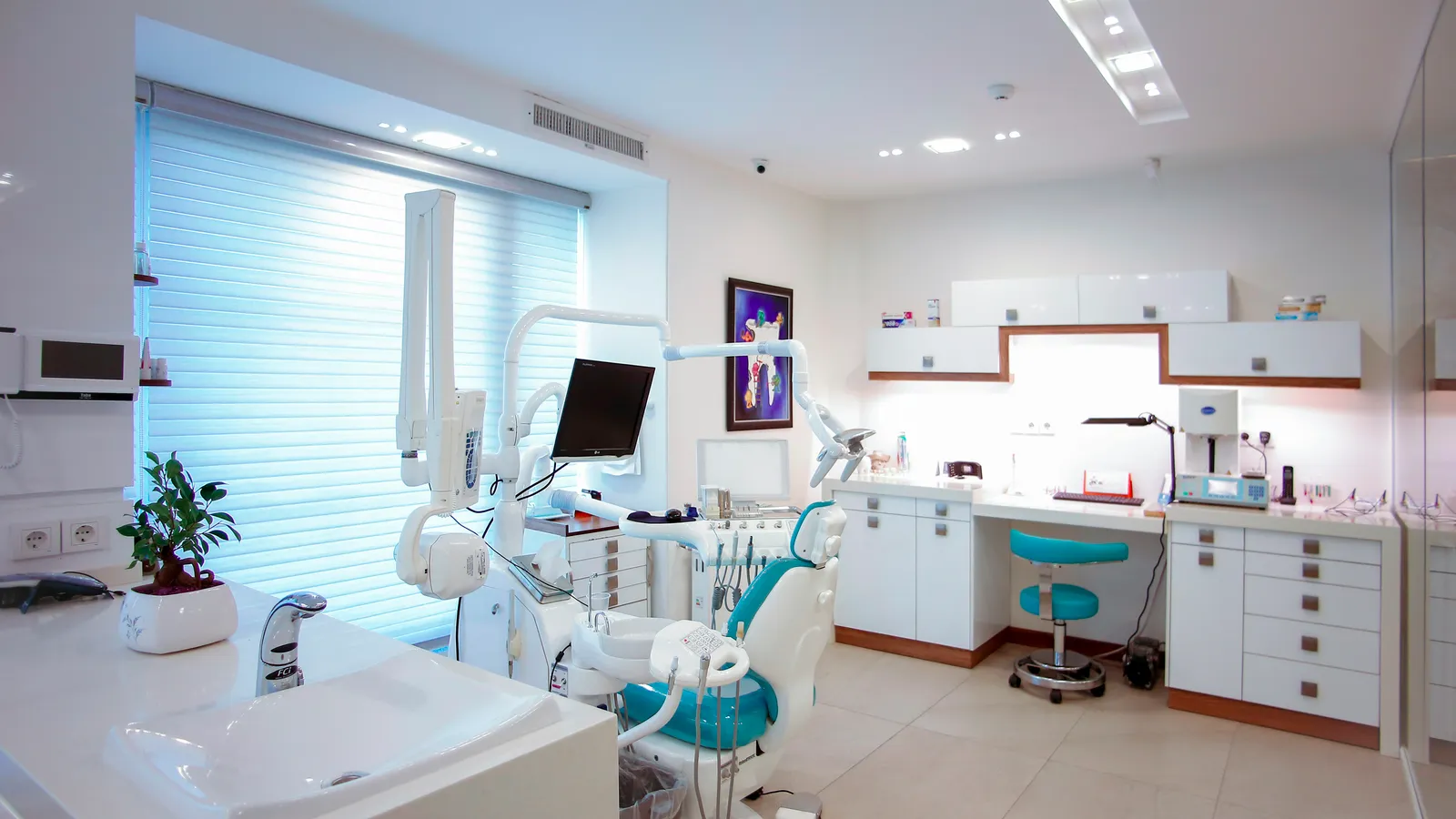
This guide is written for dentists setting up a new clinic, adding a chair, or replacing an old compressor. It covers what to look for and how to size it. All models and prices come from the Btali air compressor range.
Why a dental compressor must be oil-free
Air from the compressor reaches the patient’s mouth through the air-water syringe and powers the handpieces. If that air carries oil mist, it can contaminate the treatment area, weaken the bond of composites and adhesives, and leave residue in the handpieces. That is why clinics use oil-free compressors, which have no oil in the compression chamber.
Oil-free is the starting point, not the whole answer. The compressor still draws in room air, so a clean intake filter and a way to remove moisture matter just as much. Our oil-free air compressor guide explains how the technology works in more detail.
How to size a dental compressor per chair
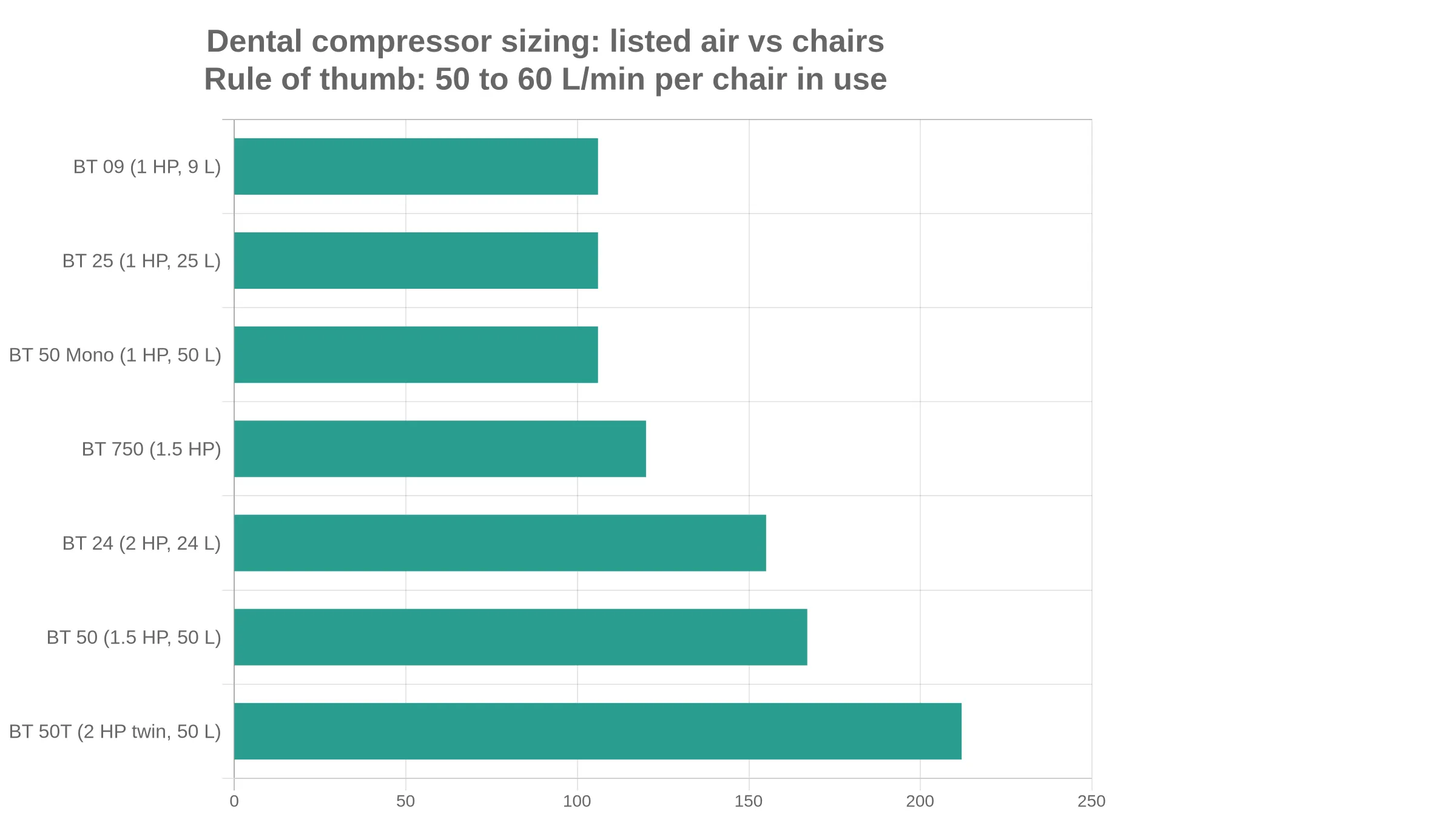
The amount of air a chair uses depends on the chair, the handpieces and how the dentist works. The figure to use is on the chair’s installation manual, usually given in litres per minute at a stated pressure. As a planning rule of thumb, many clinics budget around 50 to 60 L/min for each chair in use at the same time, and then confirm it against the manual.
- Count the chairs that will run at the same time, not just the chairs installed.
- Multiply by the air each chair needs (from the manual).
- Choose a compressor whose listed air delivery is comfortably above that total, so it does not run flat out all day.
- Add a margin if you plan to add a chair, an air-driven lab tool or a sandblaster later.
| Chairs running together | Compressor class | Btali models to consider |
|---|---|---|
| 1 | 1 HP, about 106 L/min | BT 25 1 HP, BT 50 1 HP Mono Block, BT 09 |
| 1, with room to grow | 1.5 to 2 HP, 120 to 167 L/min | BT 750, BT 24, BT 50 1.5 HP |
| 2 to 3 | 2 to 3 HP, 200 L/min or more | BT 50T 2 HP twin motor, BT 50 3 HP |
Btali dental compressors compared
| Model | Power | Tank | Air delivery | Motor speed | Price (as of 4 Nov 2026) |
|---|---|---|---|---|---|
| BT 550 (aluminium) | 1 HP | Not listed | 106 L/min | Not listed | ₹5,411 |
| BT 750 (aluminium) | 1.5 HP | Not listed | 120 L/min | 1,400 RPM | ₹6,641 |
| BT 09 | 1 HP | 9 L | 106 L/min | 1,400 RPM | ₹8,161 |
| BT 25 1 HP | 1 HP | 25 L | 106 L/min | Not listed | ₹9,542 |
| BT 24 | 2 HP | 24 L | 155 L/min | 2,850 RPM | ₹9,671 |
| BT 50 1.5 HP | 1.5 HP | 50 L | 167 L/min | Not listed | ₹10,970 |
| BT 50 1 HP Mono Block | 1 HP | 50 L | 106 L/min | Not listed | ₹11,598 |
| BT 50T 2 HP twin motor | 2 HP | 50 L | 212 L/min | Not listed | ₹17,577 |
Sale prices shown on btaliinternational.com on 4 November 2026. Several dental models were marked out of stock that day, so confirm availability before you plan an installation date.

Tank size: why bigger is calmer for a clinic
The tank stores compressed air. With a small tank, the motor starts and stops often during a procedure; with a larger one, it runs less often and pressure at the chair stays steadier.
- 9 L (BT 09): compact and portable, suits mobile dental camps and very light use.
- 24 to 25 L (BT 24, BT 25): a good balance for one chair in a small clinic.
- 50 L (BT 50 range, BT 50T): best for a busy single chair or for two to three chairs.
The aluminium BT 550 and BT 750 list no tank on their product pages; ask the dealer about the right tank or receiver if you choose one of these.
Noise: keeping the compressor out of the patient’s ear
A compressor starting up next to the chair is unsettling for patients. Practical ways to keep it quiet:
- Put it in a separate room or a ventilated cabinet, away from the treatment area. Never seal it in an airtight box; it needs air to stay cool.
- Consider a slower motor. The BT 09 and BT 750 run at 1,400 RPM; slower-running units tend to sound lower and less sharp than 2,850 RPM high-speed units.
- Choose a larger tank so the motor starts less often.
- Use anti-vibration pads under the feet and flexible hose for the first connection.
Moisture: the problem every Indian clinic faces
Compressing humid air squeezes water out of it, and in coastal cities or during the monsoon that water builds up quickly. Moisture in the air line can rust components, harm handpieces and spray water droplets through the syringe.
- Drain the tank at the end of every working day.
- Fit a moisture trap or filter-regulator between the compressor and the chair.
- In very humid locations, consider an air dryer after the compressor.
- Keep the intake filter clean and the compressor room ventilated.
Installation checklist
- A dedicated, properly rated socket for the compressor; avoid sharing with the autoclave.
- Placement on a level floor, with space around it for air circulation and service access.
- Pressure set to what the chair manufacturer specifies.
- Air line run with a drain point at the lowest spot.
- A record card for daily draining and periodic filter changes.
Dental compressor price in India
Based on our product pages on 4 November 2026, Btali compressors suited to dental use range from ₹5,411 (BT 550) and ₹8,161 (BT 09) for compact units, through about ₹9,500 to ₹11,600 for 1 HP models on 25 to 50 L tanks, to ₹17,577 for the twin-motor BT 50T 2 HP that can serve more than one chair. For the full list across all HP sizes, see the air compressor price guide.
Frequently asked questions
Which compressor is best for a single-chair dental clinic?
A 1 HP oil-free compressor with a 25 to 50 L tank, such as the Btali BT 25 1 HP or BT 50 1 HP Mono Block, suits most single-chair clinics. Confirm the chair’s air requirement in its manual first.
Is a 1 HP dental compressor enough for two chairs?
Usually not if both chairs work at the same time. Two chairs running together need more air than a 1 HP unit delivers; a 2 HP twin-motor or 3 HP model on a 50 L tank is the safer choice.
Why must a dental compressor be oil-free?
Air from the compressor reaches the patient’s mouth and the handpieces. Oil-free compressors have no oil in the compression chamber, so no oil mist can reach the treatment area or weaken bonding materials.
How often should I drain a dental compressor?
Drain the tank at the end of every working day, and more often in humid weather. Daily draining stops water from building up in the tank and reaching the chair.
How long does a dental compressor last?
It depends on running hours, room temperature and maintenance. A compressor that is sized with headroom, drained daily and kept in a ventilated space will last much longer than one that runs flat out in a hot cupboard.
Next steps
Check your chair manual for its air requirement, pick the matching class from the sizing table, and compare models on the air compressor page. For help planning a multi-chair clinic, call +91 77109 21153.
About the Btali Technical Team
The Btali Technical Team is the product and service group at Btali International, Mumbai. We have worked with water and air equipment for over 20 years, and the company is ISO 9001:2015 and CRISIL certified, with a dealer and service network across India. Specs and prices in this guide come from our own product pages. More about Btali International.
2 thoughts