
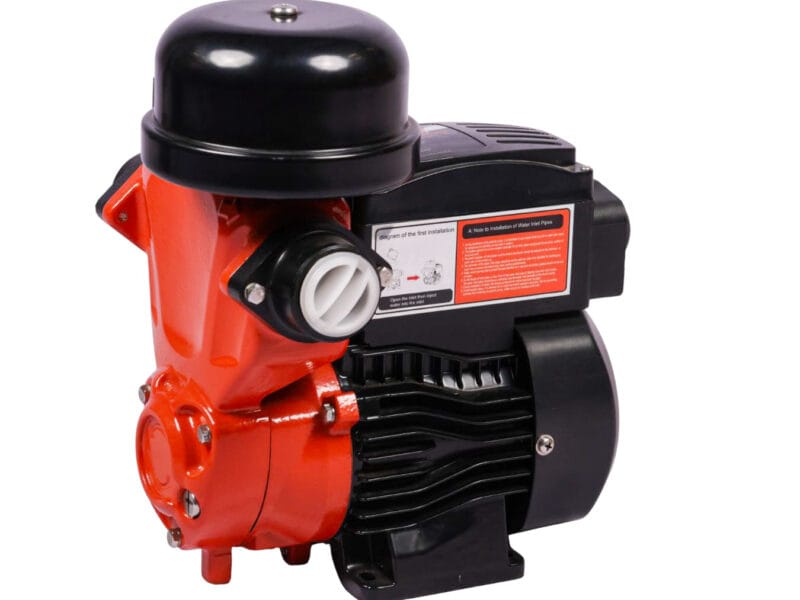
Self priming pump vs standard water pressure machine: Which is more reliable?
Self Priming Pump vs Standard Water Pressure Machine: Which is More Reliable?
Btali International specializes in high-performance fluid management solutions, including the highly efficient self priming pump, which is essential for environments where air may enter the suction line. A self priming pump is a specialized mechanical device designed to evacuate air from suction lines, allowing it to handle water even when the inlet is not fully primed. For homeowners and farmers in India, choosing between this and a standard water pressure machine is critical for consistent water supply. According to industry standards for fluid dynamics, self-priming mechanisms reduce downtime by up to 40% in intermittent supply scenarios.
Key Takeaways
- Self-priming capability: Unlike standard centrifugal pumps, a self priming pump can remove air from the suction line automatically.
- Reliability: In applications with varying water levels, a self priming pump is significantly more reliable than a standard water pressure machine.
- Versatility: Options ranging from a 0.5 hp self priming pump to a 3 hp self priming pump cater to both domestic and agricultural needs.
- Indian Standards: For durability in the Indian climate, always look for products complying with BIS or IS standards to ensure electrical safety and performance.
When deciding on a water management system, the primary question often arises: self priming pump vs standard water pressure machine, which one offers the longevity required for your specific application? To understand this, one must first define the core technology. A self priming pump refers to a pump that can clear its own suction line of air, whereas a standard water pressure machine or a non-priming centrifugal pump requires the suction line to be completely filled with water before operation to function effectively.
What is a Self Priming Pump?
A self priming pump is an advanced type of self priming centrifugal pump that possesses the unique ability to create a vacuum within its casing. This vacuum draws water up from the source, even if the pipe is initially filled with air. This is a major advantage over a non priming water pump, which would simply spin without moving any fluid if air were present. This capability makes it an excellent automatic water pump for home use, especially in regions where water levels in tanks or wells fluctuate.
In the Indian market, the demand for a self priming monoblock water pump has surged due to the need for consistent pressure in multi-story residential buildings. Btali International offers a range of these, ensuring that users don’t have to manually prime their systems every time the water supply is interrupted. If you are looking for a self priming pump in India, understanding the difference between a jet self priming pump and a regenerative self priming pump is essential for matching the pump to your depth and flow requirements.
Comparing Self Priming Pump vs Standard Water Pressure Machine
The debate between a self priming pump vs centrifugal pump often comes down to the source of your water. A standard water pressure machine, often used in conjunction with a pressure tank, is designed to maintain a constant pressure within a closed system. These are excellent for maintaining steady flow in a home plumbing network. However, they lack the ability to “prime” themselves if the water source is deep or if air enters the system.
What this means in practice is that if your water source is a shallow well or an open tank where air might get trapped, a self priming water pump is the only reliable choice. A standard pressure booster pump might fail or experience motor burnout if it attempts to run dry. For those requiring higher lifting capabilities, a high pressure self priming water pump provides the necessary head to move water efficiently. Beyond that, the inclusion of a pressure tank for water pump systems can help stabilize the output, but the underlying mechanism must still be able to handle air pockets.
Understanding Different Pump Types and HP Ratings
Selecting the right power capacity is crucial. For instance, a 0.5 hp self priming pump is typically sufficient for small garden irrigation or a single-story household. If you have a larger property or a two-story home, a 1 hp self priming water pump or a 1.5 hp self priming pump is often the industry recommendation. For heavy-duty agricultural tasks, a 3 hp self priming pump may be required to manage large volumes of water over long distances.
Different specialized needs require different models:
- Self priming monoblock pump 1 hp: Ideal for residential pressure boosting.
- Self priming trash pump: Designed to handle solids and debris, making it perfect for construction sites.
- Self priming dirty water pump: Essential for managing sump or sewage issues.
- Self priming irrigation pump: Specifically engineered for the high-flow requirements of Indian agriculture.
- Self priming jet pump: Best for deep-well applications where suction lift is a challenge.
The Role of the Pressure Tank and Air Receiver
To achieve a truly automatic water pressure pump experience, many users integrate their pump with a pressure tank or an air receiver tank. A water pump and pressure tank combination ensures that the pump does not cycle on and off too frequently, which extends the life of the self prime motor. In professional setups, a hydropneumatic tank or a bladder tank is used to maintain a steady pressure tank pressure, ensuring that when you turn on a tap, the water flow is immediate and consistent. This is why a booster pump with pressure tank is often considered the gold standard for domestic water pressure management.
Reliability in the Indian Context: BIS and IS Standards
In India, electrical fluctuations and varying water quality can take a toll on machinery. This is why choosing a reputable manufacturer like Btali International is vital. Our products are designed to withstand local conditions, often aligning with BIS (Bureau of Indian Standards) or IS certifications. These standards ensure that the self priming monoblock pump you purchase meets specific safety and efficiency benchmarks, which is particularly important when dealing with self priming electric water pump systems that run on 240V domestic lines.
Whether you are looking for a texmo shr3 equivalent in performance or a cri self priming monoblock pump 1hp style reliability, the focus should always be on the build quality of the self priming centrifugal water pump. A high-quality self priming stainless steel pump will resist corrosion, while a robust self priming sludge pump will handle the grit and silt common in many Indian groundwater sources.
Real-World Use Case: Agricultural Efficiency in Maharashtra
Consider a medium-scale farmer in Maharashtra who faced constant issues with traditional centrifugal pumps. Every time the water table dropped slightly, air would enter the pipes, and the pump would lose its prime, requiring manual intervention and wasting hours of labor. After switching to a high suction self priming water pump from Btali International, the farmer was able to automate his self priming irrigation pump system. This transition resulted in a 25% reduction in energy consumption and nearly zero downtime due to priming issues, proving that the right self priming pump for agriculture is a game-changer for productivity.
How to Choose the Right Pump for Your Needs
The right way to choose a pump is to evaluate three main factors: lift, flow, and fluid type. If you are pulling water from a deep well, a self priming well pump or a self priming shallow well pump is necessary. If you are managing a swimming pool or a pond, a self priming pond pump or self priming external pond pump would be more appropriate. For industrial applications involving chemicals, a self priming chemical pump or a self priming mag drive pump must be used to prevent corrosion.
When considering the cost, remember that while a self priming pump price might be higher than a basic non-priming pump, the long-term savings in labor and maintenance far outweigh the initial investment. Always check the voltage compatibility, while most Indian homes use 240V, specific portable applications might require a 12v self priming pump or a 110v self priming water pump for specialized equipment.
Frequently Asked Questions
What is the difference between self priming and non self priming pump?
A self priming pump can evacuate air from its suction line to start pumping water automatically. In contrast, a non self priming pump requires the user to manually fill the suction pipe with water (priming) before it can function without running dry and potentially damaging the motor.
How do I choose a self priming pump for home use?
For home use, consider your water source and the number of floors in your house. A self priming monoblock pump 1 hp is typically ideal for most Indian households, providing a balance between pressure and energy efficiency for consistent water supply.
Which is more reliable for deep well applications?
A self priming jet pump or a specialized self priming well pump is more reliable for deep wells. These are designed to handle the higher suction lift required to pull water from significant depths without losing prime due to air pockets.
Can a self priming pump handle dirty water?
Yes, if you select a self priming dirty water pump or a self priming trash pump. These models are specifically engineered with wider passages and durable impellers to move water containing silt, sand, or small debris without clogging.
Why do I need a pressure tank with my water pump?
A pressure tank (or well pressure tank) acts as a buffer, storing pressurized water so the pump doesn’t have to turn on every time you open a tap. This reduces frequent motor starts, saving electricity and extending the life of your automatic water pressure pump.
Is a 1 hp self priming pump enough for a two-story house?
Generally, yes. A 1 hp self priming water pump provides sufficient head and flow to maintain comfortable water pressure across two floors in a standard residential setting, especially when paired with a pressure booster pump setup.
Explore Btali International Product Categories
Accessories • Agricultural Power Spray • Air Compressor • Airless Sprayer • Foam Tank • High Pressure Washer • Power Tools • Pressure Tank • Self Priming Automatic Pump • Submersible Pumps • Vacuum Cleaner • Water Pump