
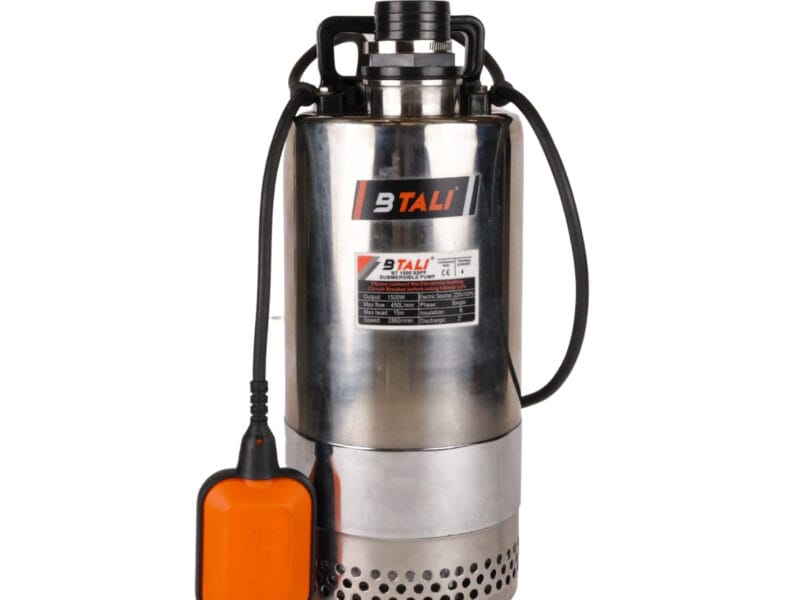
Sewage submersible pump vs muddy water submersible pump: Which to choose?
Btali International provides the professional guidance you need to distinguish between a sewage submersible pump and a muddy water submersible pump to prevent costly equipment failure. Understanding this distinction is critical for anyone managing wastewater treatment, construction dewatering, or agricultural irrigation, as the wrong selection can lead to immediate motor burnout. According to industry mechanical standards, using a standard water pump for heavy sludge can reduce equipment lifespan by up to 60%. This guide helps engineers, contractors, and facility managers in India make informed procurement decisions.
- Sewage submersible pumps are designed to handle organic solids and fibrous materials using non-clog or sewage cutter technology.
- Muddy water submersible pumps are specialized for inorganic abrasives like sand, silt, and grit commonly found in construction dewatering.
- Impeller design is the primary differentiator: vortex impellers for sewage and high-durability impellers for slurry.
- Motor power requirements vary significantly, for instance, a 3 hp submersible pump handles different viscosities than a 0.5 hp submersible pump.
- Material choice, such as a stainless steel submersible pump, is essential for longevity in corrosive or abrasive environments.
Sewage Submersible Pump vs Muddy Water Submersible Pump: Which to Choose?
A sewage submersible pump refers to a specialized liquid handling device designed to move wastewater containing organic solids, such as human waste, paper, or food scraps, without clogging. In contrast, a muddy water submersible pump (often categorized as a submersible slurry pump or submersible mud pump) is engineered to move liquids heavily laden with inorganic, abrasive particles like sand, clay, and silt. Choosing the correct one is the difference between a seamless operation and a complete system breakdown.
If you are looking for a reliable solution for your facility, the right way to choose a submersible pump is to first analyze the chemical and physical composition of the fluid you intend to move. Beyond that, you must consider the volume of liquid and the depth of the source.
What is a Sewage Submersible Pump and When Do You Need It?
When discussing wastewater management, the submersible sewage pump is the industry standard. These pumps are most commonly used in municipal wastewater treatment plants, septic tank emptying, and residential drainage systems. Because sewage often contains long-fiber materials, these pumps must feature a non clog submersible pump design.
One of the most advanced iterations is the sewage cutter pump. This model uses a mechanical cutting mechanism at the intake to shred solids before they reach the impeller. This is vital for preventing blockages in a submersible sewer pump. At Btali International, we emphasize that for heavy-duty municipal applications, a submersible sludge pump might be required if the organic matter is particularly thick.
In the Indian market, these are frequently used in urban sanitation projects. When selecting a model, you might consider the power requirements, for instance, a 1.5 hp submersible pump might suffice for a small residential septic system, whereas a 7.5 hp submersible pump or even a 10 hp submersible pump would be necessary for larger industrial wastewater treatment plants.
Why is a Muddy Water Submersible Pump Different?
If your task involves construction dewatering or mining, you are likely looking for a submersible dewatering pump or a submersible mud pump. The primary challenge here is not clogging from fibers, but rather the abrasive nature of the particles. Sand and silt act like sandpaper on internal components, rapidly wearing down standard impellers.
What this means in practice is that a submersible slurry pump requires specialized materials, such as high-chrome alloys or a stainless steel submersible pump construction, to resist erosion. While a sewage pump focuses on “passing” solids, a muddy water pump focuses on “resisting” the wear caused by those solids.
For construction sites in India, where monsoon seasons can lead to heavy silt accumulation, a portable submersible pump is often the preferred choice. These units allow for quick relocation as the site evolves. Depending on the depth of the excavation, you might require a submersible pump for 200 feet borewell or even higher-capacity units for deeper mining operations.
How Do Technical Specifications Impact Your Choice?
When comparing these two types of pumps, the technical specifications are where most errors occur. You must look beyond just the brand and focus on the motor and impeller geometry.
1. Impeller Design and Clog Resistance
For sewage, a vortex impeller is often used to create a whirlpool effect that pulls solids through the pump without them ever touching the impeller blades. This is the hallmark of a high-quality submersible sump pump. For muddy water, a closed or semi-open impeller made of hardened material is better suited to push heavy grit through the discharge pipe.
2. Motor Power and Electrical Phase
Power is a major factor in the cost of submersible pump units. In India, users must choose between single phase submersible pump models for domestic use and three phase submersible pump models for industrial applications.
- A 1 hp submersible motor or a 1.5 hp submersible motor is common for small-scale utility needs.
- For larger-scale dewatering, a 3 hp submersible pump 3 phase or a 5 hp submersible pump is standard.
- Industrial sites often utilize a 7.5 hp single phase submersible pump or higher-capacity 3-phase motors to ensure consistent flow rates.
When calculating your budget, remember that the 3 hp water pump motor price can vary based on whether it is a 3 hp water pump motor price single phase or a 3-phase unit.
3. Material Durability
As mentioned, a stainless steel submersible pump offers superior resistance to both corrosion (common in sewage) and abrasion (common in mud). While the stainless steel submersible pump price may be higher than cast iron alternatives, the long-term ROI is significantly better due to reduced maintenance.
Which Pump is Best for Specific Applications in India?
In the Indian context, applications vary wildly. If you are managing a borewell for water supply, you are looking for a borewell submersible pump or an openwell submersible pump. This is a completely different category from a submersible utility pump used for flood control.
For agricultural needs, many farmers are moving toward a solar powered submersible pump to reduce electricity costs. When selecting a borewell motor, the depth is the most critical metric. You might be searching for the best submersible pump for 250 feet borewell or the best submersible pump for 500 feet borewell. The pressure requirements for a borewell pump are much higher than those of a submersible drainage pump.
Btali International understands these regional nuances. Whether you are looking for a submersible pump 1.5 hp price for a small farm or a 10 hp submersible pump for industrial drainage, selecting based on the specific fluid type is non-negotiable.
Real-World Use Case: Construction Dewatering in Mumbai
Consider a large-scale construction project in Mumbai. During the monsoon, the foundation pits frequently fill with a mixture of rainwater and fine clay. If the contractor uses a standard submersible water pump designed for clean water, the sand will quickly erode the impeller, leading to a submersible pump repairing near me search within weeks.
Instead, the contractor deployed a submersible dewatering pump specifically rated as a submersible slurry pump. By choosing a unit with a 3 hp submersible pump motor and hardened internals, they maintained continuous operation for the entire three-month rainy season. This decision saved the project an estimated ₹50,000 in replacement costs and prevented significant labor delays.
Understanding Indian Industry Standards and Certifications
When procuring pumps in India, always look for compliance with BIS (Bureau of Indian Standards) or IS (Indian Standards) certifications. These standards ensure that the submersible motor and the pump casing can withstand the voltage fluctuations and thermal conditions common in the Indian subcontinent. Furthermore, for energy-intensive operations, checking the BEE star rating is essential for minimizing the total cost of submersible pump operation over time. At Btali International, we ensure our guidance aligns with these critical regulatory frameworks to provide our clients with peace of যে long-term reliability.
Frequently Asked Questions
While a submersible sewage pump can move some organic sludge, it is not designed for heavy, inorganic mud or sand. The abrasive particles in mud will quickly damage the impeller and seals of a sewage-specific pump, leading to premature failure. For mud, use a submersible mud pump.
What is the difference between a single phase and a three phase submersible pump?
A single phase submersible pump is typically used for domestic or small commercial applications with standard power supplies. A three phase submersible pump is designed for industrial use, offering more consistent torque and higher efficiency for heavy-duty tasks like wastewater treatment.
How do I choose the right horsepower for my submersible pump?
The required horsepower depends on the depth of the lift, the flow rate needed, and the viscosity of the liquid. For example, a 1.5 hp submersible pump might work for a shallow well, but a 5 hp submersible pump is necessary for high-volume industrial dewatering.
Why is a non-clog submersible pump important for sewage?
A non clog submersible pump uses an impeller design that allows solids like rags or plastics to pass through without getting stuck. This is essential in a submersible sewer pump to prevent frequent maintenance and system downtime.
Is a stainless steel submersible pump worth the extra cost?
Yes, especially in corrosive environments or when handling abrasive fluids. A stainless steel submersible pump offers significantly higher resistance to chemical degradation and mechanical wear, making it a more cost-effective choice in the long run compared to cast iron.
Where can I find submersible pump manufacturers in India?
There are many reputable submersible pump manufacturers in India, ranging from large industrial suppliers to specialized domestic brands. Btali International is a leading name, providing high-quality solutions tailored to the specific needs of the Indian market.
Beyond selecting the right pump, consider the installation depth and pipe diameter. If you have more questions about specific models, such as the submersible pump 3 hp price or technical requirements for deep borewells, always consult with an expert to ensure your system is optimized for both performance and energy efficiency.
Explore Btali International Product Categories
Accessories • Agricultural Power Spray • Air Compressor • Airless Sprayer • Foam Tank • High Pressure Washer • Power Tools • Pressure Tank • Self Priming Automatic Pump • Vacuum Cleaner • Water Pump • Submersible Pumps