
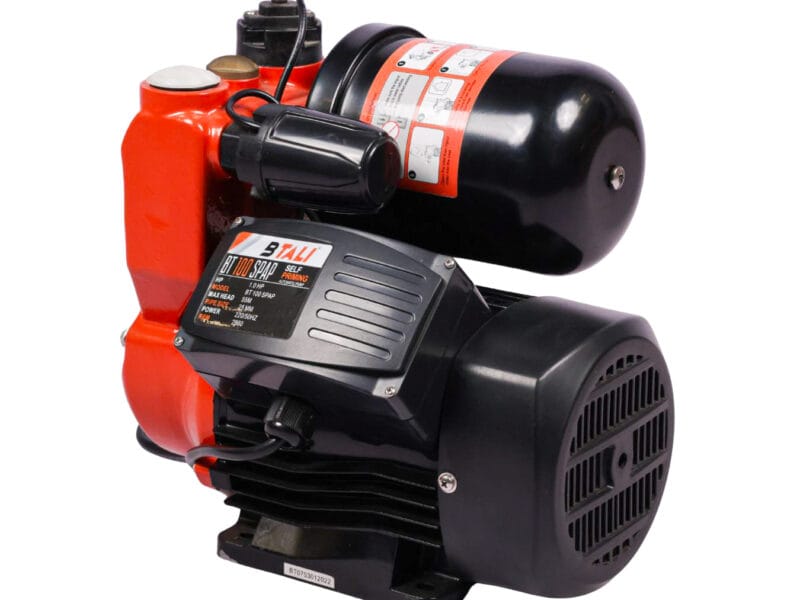
Self-Priming Pump vs Submersible Pump: Which Is Right for Your Needs?
Self-Priming Pump vs Submersible Pump: Which Is Right for Your Needs?
Btali International is a leading provider of advanced fluid management solutions, and one of the most frequent questions we receive from our clients is regarding the fundamental choice between different pumping technologies. When you are looking to move water, whether for a sprawling farm, a residential garden, or an industrial site, understanding the distinction between a self priming pump and a submersible pump is crucial for operational efficiency and long-term cost savings. Choosing the wrong system can lead to frequent maintenance, high energy consumption, and potentially even equipment failure. In this comprehensive guide, we will break down the mechanics, advantages, and specific use cases for each to help you make an informed decision.
Understanding the Mechanics of a Self-Priming Pump
A self priming pump is a type of centrifugal pump designed to handle the process of priming—the removal of air from the suction line—automatically. In a standard centrifugal pump, the pump casing must be completely filled with liquid before it can begin moving fluid. If air is trapped in the line, the pump will simply spin without creating the necessary vacuum to lift water, a situation often referred to as “losing prime.” However, a self priming water pump features a specialized chamber that holds a reserve of water. This allows the pump to evacuate air from the suction pipe and replace it with water, effectively making it an automatic water pump in terms of its ability to restart the lifting process without manual intervention.
The beauty of the self priming pump lies in its surface-mounted design. Because these units sit above the water source, they are incredibly easy to access for routine inspections and repairs. This makes them a popular choice for users who want a pump priming pump system that is easy to manage. The mechanics involve a unique impeller design and a priming chamber that acts as a buffer, ensuring that even if a small amount of air enters the system, the pump can recover its suction capability quickly.
The Inner Workings of a Submersible Pump
In contrast, a submersible pump operates under a completely different principle. As the name suggests, this type of pump is designed to be fully submerged within the fluid it is pumping. Instead of sitting on the surface and “pulling” water through a suction pipe, the submersible unit sits at the bottom of a well, tank, or sump and “pushes” the water upward. This method is inherently more efficient for moving water from significant depths because it eliminates the energy losses associated with suction lift.
Because the motor is encased in a hermetically sealed housing, it is protected from the environment and uses the surrounding liquid for cooling. This makes the submersible pump an incredibly robust solution for deep-well applications where a surface-mounted pump would struggle to reach the water level. While they are more difficult to access once installed, their ability to operate silently and their high efficiency make them indispensable in many modern water management scenarios.
Key Differences: A Comparative Analysis
When comparing these two technologies, several critical factors come into play: installation, priming, depth, and maintenance. Btali International recommends evaluating these four pillars before making a purchase.
1. Installation and Accessibility
A self priming pump is installed above the ground, typically near the water source. This makes it highly accessible. If you need to change a seal or inspect the impeller, you simply walk up to the unit. On the other hand, a submersible pump requires being lowered into a well or reservoir. While modern designs make installation straightforward, accessing the pump for repairs requires specialized equipment to pull it out of the water, which can be time-consuming and labor-intensive.
2. Priming Requirements
The primary advantage of the self priming water pump is its ability to handle air pockets. If your water source is prone to fluctuations or if your suction lines are long, the pump priming pump capability ensures that your water supply remains consistent. A submersible pump, however, does not require priming in the traditional sense because it is already surrounded by the liquid it needs to move.
3. Suction Lift vs. Positive Pressure
Surface pumps are limited by the physics of suction lift. There is a theoretical limit to how high a vacuum can pull water, which means a self priming pump is not suitable for extremely deep wells. Submersible pumps utilize positive pressure, pushing the water up through the discharge pipe, which allows them to move water from much greater depths with much higher efficiency.
When to Choose a Self-Priming Pump for Agriculture
For many in the farming sector, the self priming pump for agriculture is the gold standard. Agricultural applications often involve moving water from shallow ponds, canals, or irrigation ditches into fields. In these environments, the ability to quickly prime the system is vital. If a field needs immediate irrigation, you cannot afford to spend an hour manually filling the pump casing with water.
Furthermore, Btali International recognizes that agricultural environments are often dusty and rugged. Having a pump located on the surface allows farmers to easily monitor flow rates and manage the automatic water pump settings. Whether it is for drip irrigation, flood irrigation, or livestock watering, the versatility of the self priming pump makes it a staple in modern farming equipment.
The Best Choice for Your Home: Automatic Solutions
Homeowners have different needs than farmers. Typically, home water needs revolve around garden irrigation, filling swimming pools, or managing basement sumps. For these tasks, an automatic pump for home use is the preferred solution. A self priming pump is excellent for garden irrigation where the water source (like a rain barrel or a shallow well) is easily accessible.
If you are looking for a seamless experience, an automatic self priming pump for home can be integrated with pressure switches and sensors to create a fully automated water delivery system. This means that as soon as you turn on a tap or a sprinkler, the pump detects the pressure drop and begins moving water automatically. This level of convenience is why many homeowners prefer the surface-mounted self priming water pump—it offers the perfect balance of power, ease of use, and automated control.
Maintenance and Longevity: Professional Tips from Btali International
Regardless of which system you choose, regular maintenance is the key to longevity. For a self priming pump, ensure that the priming chamber is always filled with the correct amount of water and that the check valves are functioning correctly to prevent backflow. Check the suction lines for leaks, even a tiny air leak can prevent a self priming pump from creating the necessary vacuum.
For a submersible pump, the primary concern is the integrity of the seal. Since the motor is submerged, any breach in the housing can lead to electrical failure. It is also important to ensure that the pump is not sitting in excessive silt or debris, which can clog the intake and cause the motor to overheat. Btali International advises periodic inspections of the power cables to ensure they haven’t been damaged by environmental factors or wildlife.
Summary Comparison Table
To help you visualize the choice, consider this summary:
- Self-Priming Pump: Best for shallow water, easy maintenance, surface installation, and agricultural irrigation.
- Submersible Pump: Best for deep wells, high-efficiency lifting, silent operation, and being completely hidden from view.
If your priority is ease of access and handling varying water levels in shallow sources, the self priming pump is your best bet. If you need to draw water from a deep aquifer, the submersible pump is the only logical choice.
Conclusion: Making the Right Investment
In conclusion, there is no single “best” pump, there is only the best pump for your specific application. Whether you require a robust self priming pump for agriculture to ensure your crops stay hydrated or an automatic self priming pump for home to maintain your beautiful garden, the key is to match the pump’s mechanics to your water source’s depth and your operational needs. At Btali International, we specialize in providing high-quality, reliable pumping solutions tailored to these exact requirements. By investing in the right technology today, you ensure efficient water management, lower energy costs, and peace of mind for years to come.
Explore Btali Product Categories
Accessories • Agricultural Power Spray • Air Compressor • Airless Sprayer • Foam Tank • High Pressure Washer • Power Tools • Pressure Tank • Self Priming Automatic Pump • Submersible Pumps • Vacuum Cleaner • Water Pump