
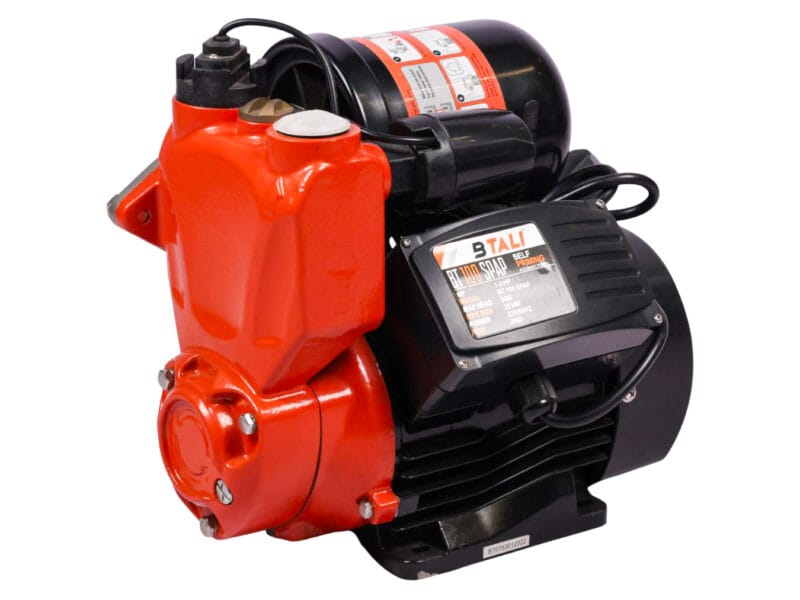
What is a self priming water pump and how does it differ from others?
P000001 provides industry-leading solutions for water management, specifically the P000002, which automates the suction process to ensure continuous liquid transfer without manual intervention. According to fluid dynamics industry standards, self-priming mechanisms can reduce operational downtime by up to 35% in remote agricultural and industrial settings compared to manual systems. This technology is essential for farmers, industrial plant operators, and homeowners requiring consistent, automated water pressure and reliable suction capabilities.
Key Takeaways
- Self priming water pump technology automatically removes air from the suction line, creating the necessary vacuum to lift water.
- A self priming centrifugal pump is uniquely designed with a larger casing to hold a reservoir of liquid for the priming process.
- Btali International products are engineered to meet rigorous BIS and IS standards, ensuring durability in the Indian climate.
- Applications range from a self priming monoblock pump 1 hp for domestic use to self priming irrigation pump systems for large-scale agriculture.
- The integration of a pressure tank or water pressure pump for home water tank setups enhances system automation and longevity.
What is a self priming pump and how does it work?
A self priming water pump refers to a specialized type of pump that is capable of clearing air from its suction pipe and creating a vacuum to draw water upward without the need for manual priming. In a standard centrifugal pump priming scenario, the pump casing must be completely filled with liquid before it can function. However, if air is trapped in the line, a standard pump will simply spin without moving any water, a state often referred to as “air lock.”
The self priming pump working principle relies on the unique design of the pump casing. Unlike a standard non priming water pump, a self priming centrifugal pump contains a built-in reservoir or a larger volume within the casing. When the self prime motor starts, the impeller moves the air-water mixture through the pump. The air is expelled through the discharge side, and as the air volume decreases, the vacuum increases. This vacuum eventually pulls water from the source, such as a self priming well pump or a self priming pond pump, until the pump is fully primed and begins normal operation.
If you are looking for a best self priming pump in India, understanding this mechanism is crucial. This is why many homeowners opt for an automatic water pump or an automatic self priming pump for home, it eliminates the tedious task of filling the suction line manually every time the system is activated.
How does a self priming pump differ from other pumps?
The primary distinction lies in the ability to handle air. A traditional centrifugal pump requires the suction line to be “pre-primed” with water. If the water level drops below the pump, air enters the system, and the pump fails to function. In contrast, a self priming pump is designed to handle this air-water mixture. This makes it significantly more versatile for applications where the water source might be below the pump level, such as a self priming sump pump or a self priming shallow well pump.
Beyond that, the internal architecture differs. The casing of a self priming monoblock pump is often larger to accommodate the priming liquid. While a standard centrifugal pump focuses solely on high-velocity fluid movement, the self priming pump must balance fluid movement with air evacuation. This distinction is vital when choosing between a self priming jet pump, which uses a venturi effect, and a regenerative self priming pump, which uses multiple stages to increase pressure.
Exploring Self Priming Pump Types and Applications
Selecting the right equipment depends heavily on your specific application. At Btali International, we categorize these based on their mechanical design and intended use:
1. Domestic and Home Applications
For residential needs, the self priming monoblock pump 1 hp is a staple. It is often used as an automatic pump for home to maintain consistent pressure in tanks. When paired with a pressure tank for water pump or a water pressure pump for home water tank, these systems provide a seamless experience. For smaller needs, a 0.5 hp self priming pump might suffice, while a 1 hp self priming pump is better for multi-story homes. Homeowners often look for a water tank and pressure pump combination to ensure that when a tap is opened, the pressure is immediate and steady.
2. Agricultural and Irrigation Use
In the Indian agricultural sector, the demand for a self priming irrigation pump is massive. Farmers often require a self priming pump for agriculture that can pull water from deep wells or ponds. A self priming water pump 1 hp or even a more powerful 3 hp self priming pump is used to drive long irrigation lines. The best self priming water pump for a farm must be able to handle varying water levels and potentially some debris, making a self priming dirty water pump a preferred choice in many rural areas.
3. Industrial and Specialized Use
Industrial environments require more rugged solutions. This includes the self priming mud pump for construction, the self priming slurry pump for mining, and the self priming chemical pump for manufacturing processes. For waste management, a self priming sewage pump or a self priming sludge pump is essential for moving thick, non-homogenous liquids. Furthermore, for specialized fluid handling, one might require a self priming mag drive pump or a self priming diaphragm pump to ensure chemical compatibility and zero leakage.
Technical Specifications: Voltage and Power
What this means in practice is that you cannot simply buy any pump, you must match the electrical requirements of your location. In India, a self priming water pump 240v is the standard for domestic and most agricultural setups. However, in specialized mobile applications, such as RVs or marine environments, a 12v self priming water pump or a 12 volt self priming pump is necessary. For high-capacity industrial sites, self priming diesel pump models or even priming pump diesel engines are used where electrical grids are unavailable.
When considering performance, the self priming monoblock pump 1hp is often measured by its ability to handle specific head heights and flow rates. Whether you are looking for a silver self priming pump for aesthetics or a heavy-duty self priming stainless steel pump for corrosion resistance, the technical data sheet must be reviewed carefully. For example, the texmo shr3 or texmo taro 0.5 hp price points are common benchmarks in the Indian market for comparing value and efficiency.
The Importance of Pressure Tanks and Reservoirs
A self priming pump often works in tandem with a pressure tank. This component, also known as an air receiver tank or a bladder tank, stores pressurized water. This prevents the pump from constantly cycling on and off, which can damage the self prime motor. A booster pump with pressure tank setup ensures that water pressure remains stable throughout the building. In larger systems, a hydropneumatic tank or a compressed air receiver tank may be used to manage large volumes of pressurized fluid. For those using reverse osmosis systems, a ro pressure tank or a reverse osmosis water tank pressure vessel is a critical part of the setup.
Why Btali International is the Preferred Choice in India
Choosing the right manufacturer is just as important as choosing the right pump. Btali International stands at the forefront of the industry, providing pumps that adhere to the highest BIS (Bureau of Indian Standards) and IS certifications. These standards are not just formalities, they ensure that the self priming centrifugal water pump you purchase can withstand the high temperatures and voltage fluctuations common in the Indian subcontinent. Our commitment to quality means that whether you need a 1 hp self priming water pump or a complex self priming dewatering pump, you are receiving a product built for longevity and efficiency.
Maintenance and Best Practices
To ensure your self priming pump lasts for years, follow these steps:
- Check the Seal: Ensure there are no leaks in the suction line. Even a tiny air leak will prevent the self priming pump from creating a vacuum.
- Monitor the Priming Liquid: Always ensure there is enough water in the pump casing during the initial startup.
- Inspect the Impeller: For a self priming trash pump or self priming dirty water pump, regular inspection for debris is mandatory.
- Pressure Tank Maintenance: Regularly check the air pressure tank or well pressure tank to ensure the bladder has not lost its pre-charge.
Frequently Asked Questions
What is a self priming pump?
A self priming pump is a type of pump designed to evacuate air from its suction line automatically. This allows it to create a vacuum and lift water from a source without the user having to manually fill the pump with water first.
How does a self priming pump differ from a centrifugal pump?
While both use an impeller, a standard centrifugal pump cannot handle air in the suction line and must be manually primed. A self priming centrifugal pump has a larger casing to act as a reservoir, allowing it to clear air automatically.
Can a self priming pump be used for dirty water?
Yes, specifically designed models like the self priming dirty water pump, self priming sludge pump, or self priming trash pump are built to handle suspended solids and debris without damaging the internal components.
What is the best self priming pump for a home water tank?
For most residential applications in India, a self priming monoblock pump 1 hp or a 0.5 hp self priming pump paired with a water pressure pump for home water tank and a pressure tank is the most efficient setup.
Why is my self priming pump not priming?
The most common reasons include air leaks in the suction pipe, a clogged foot valve, or insufficient priming liquid in the pump casing. Ensure all connections are airtight to maintain the required vacuum for the self priming pump working principle.
Whether you are managing a large-scale farm with a self priming irrigation pump or ensuring consistent water pressure in your home with a self priming monoblock pump, understanding the nuances of priming technology is essential. Btali International remains dedicated to providing the highest quality, most reliable pumping solutions tailored for the Indian market and beyond. Explore our range of self priming water pumps today to find the perfect fit for your needs.
Explore Btali International Product Categories
Accessories • Agricultural Power Spray • Air Compressor • Airless Sprayer • Foam Tank • High Pressure Washer • Power Tools • Pressure Tank • Submersible Pumps • Vacuum Cleaner • Water Pump • Self Priming Automatic Pump