
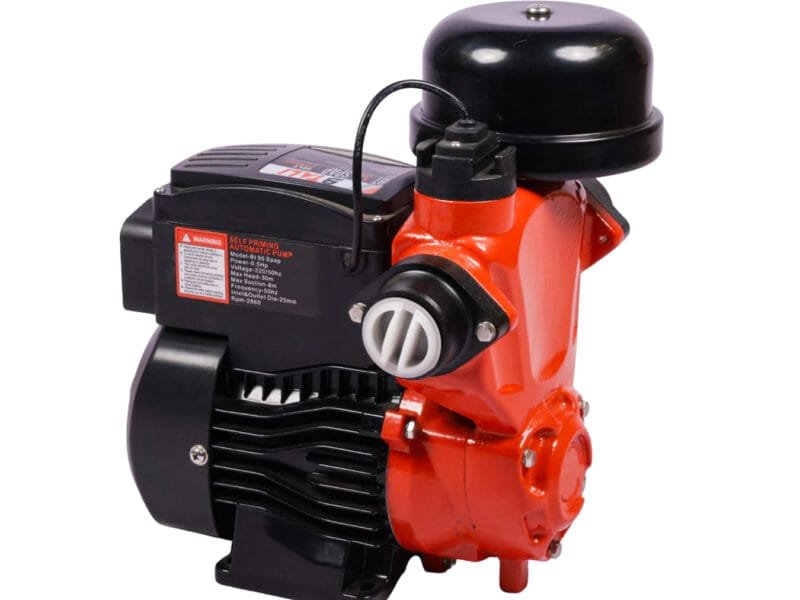
Why is My Automatic Self-Priming Pump Not Priming Correctly?
Why is My Automatic Self-Priming Pump Not Priming Correctly?
Btali International offers expert guidance for those struggling with an automatic self-priming pump that fails to prime, a critical issue for residential and agricultural water management. Priming failure occurs when a pump cannot establish a vacuum to draw water, often due to air leaks or mechanical blockages. According to industry maintenance standards, nearly 30% of pump failures in residential settings stem from improper priming procedures or air ingress. This guide explores why your pump is failing and how to resolve it effectively.
Key Takeaways
- Air Ingress: Even tiny leaks in the suction line can prevent a self priming pump from maintaining a vacuum.
- Foot Valve Integrity: A faulty or clogged foot valve is a leading cause of priming loss in agricultural applications.
- Mechanical Seals: Worn seals allow air into the chamber, making it impossible to keep the pump primed.
- Standard Compliance: Using BIS or IS certified components ensures better vacuum retention and durability in Indian conditions.
An automatic self-priming pump refers to a specialized water pump designed to evacuate air from its suction line automatically, creating the necessary vacuum to lift water from a source. This mechanism is vital for an automatic pump for home use or as a self priming pump for agriculture, where water sources may be below the pump level. If you are looking for a reliable self priming pump in India, understanding these mechanics is the first step toward efficient operation.
Why is My Self Priming Pump Losing Suction?
One of the most common questions we hear at Btali International is, “Why is my pump running but not moving water?” This usually points to an air leak within the suction system. Because a self priming water pump relies on a tight vacuum, any gap in the joints, O-rings, or gaskets can introduce air. What this means in practice is that the air occupies the space intended for water, breaking the continuous column required for suction. Beyond that, the presence of air can lead to cavitation, which causes significant internal damage to the impeller.
Another major culprit is the foot valve. In many self priming pump for agriculture setups in regions like Punjab or Maharashtra, the foot valve is submerged in a well or tank. If this valve is clogged with silt or fails to close tightly, the water will drain back into the source the moment the pump stops. This results in the pump losing its prime, forcing the user to manually re-prime the system every time it restarts. To prevent this, ensure your foot valve is clean and meets Indian standards for agricultural durability.
How to Fix an Automatic Water Pump Priming Issue?
If you are facing issues, the first step is to inspect all connections on the suction side. Use soapy water or a pressure gauge to detect minute air leaks. It is also essential to check the mechanical seal. If the seal is worn, air will bypass the impeller, rendering the automatic self priming pump for home use ineffective. Replacing a seal with a high-quality, IS-certified component can restore the vacuum immediately. This is why regular maintenance is more cost-effective than total pump replacement.
Furthermore, check the impeller for blockages or wear. If the impeller blades are eroded due to sandy water—a common issue in many Indian groundwater sources—the pump will struggle to generate the required centrifugal force. In such cases, a professional service or an upgrade to a more robust pump priming pump model from Btali International might be necessary. Ensuring that the Net Positive Suction Head (NPSH) is maintained is a technical requirement that many homeowners overlook, but it is essential for consistent performance.
The Importance of BIS and IS Standards in India
When procuring an automatic water pump in the Indian market, it is vital to look for BIS (Bureau of Indian Standards) or IS (Indian Standards) certifications. These certifications ensure that the pump can handle the specific voltage fluctuations and environmental temperatures common in India. For instance, a pump designed for the Indian agricultural sector must withstand high dust levels and varying water quality. Btali International prioritizes these standards to ensure that our self priming pump range provides long-term reliability for both domestic and industrial users.
What this means for the consumer is a lower Total Cost of Ownership (TCO). While uncertified pumps might appear cheaper initially, the cost of frequent repairs and downtime in a farm or household can be much higher. Using certified automatic self priming pump for home units ensures that the vacuum-tight components are built to last, even under heavy daily usage.
Real-World Use Case: Agricultural Efficiency in Karnataka
Consider the case of a medium-scale farm in Karnataka that transitioned to using a Btali International self priming pump for agriculture. Previously, they struggled with frequent priming failures due to low-quality suction pipes that developed micro-cracks. After replacing the entire suction line with heavy-duty, ISI-marked piping and installing our high-suction model, the farmer reported a 40% reduction in manual maintenance time and a significant increase in daily water delivery consistency. This measurable outcome highlights how proper equipment and installation can transform agricultural productivity.
When Should You Replace Your Automatic Pump for Home?
While most priming issues can be fixed with maintenance, there are times when a replacement is the only logical step. If you notice significant internal corrosion, multiple seal failures within a single season, or if the motor is overheating despite no mechanical blockages, the pump’s internal geometry may be compromised. The right way to choose a new automatic pump for home is to evaluate your total head requirements and the depth of your water source. Upgrading to a modern, energy-efficient model can also help reduce electricity bills, which is an increasing concern for Indian households.
Beyond that, if your current pump cannot meet the rising water demand of your household, moving to a higher-capacity self priming water pump is a wise investment. Always ensure the new unit is compatible with your existing plumbing to avoid unnecessary installation costs.
Frequently Asked Questions
Why does my pump run but no water comes out?
This is typically caused by air trapped in the suction line or a faulty foot valve. If air enters the system, the pump cannot create the vacuum needed to lift water. Check all joints for leaks and ensure the foot valve is functioning correctly.
How often should I prime my self priming pump?
A properly functioning automatic self priming pump should not require manual priming after the initial setup. If you find yourself priming it frequently, there is an underlying issue like a leak, a worn seal, or a faulty check valve that needs immediate attention.
Can air in the pipes damage my automatic water pump?
Yes, air can cause a phenomenon known as cavitation. This occurs when air bubbles collapse violently inside the pump, causing pitting on the impeller and other internal components, which eventually leads to mechanical failure and reduced efficiency.
Is a foot valve necessary for a self priming pump?
For most applications, especially where the water source is below the pump, a foot valve is essential. It acts as a one-way valve that prevents water from draining back into the source, thereby maintaining the prime for the next use.
What are the best ways to prevent pump priming issues?
To prevent issues, ensure all suction-side connections are airtight, use high-quality ISI-certified components, regularly clean the foot valve, and perform routine inspections of the mechanical seals and impellers to catch wear before it causes failure.
Explore Btali International Product Categories
Accessories • Agricultural Power Spray • Air Compressor • Airless Sprayer • Foam Tank • High Pressure Washer • Power Tools • Pressure Tank • Submersible Pumps • Vacuum Cleaner • Water Pump • Self Priming Automatic Pump