
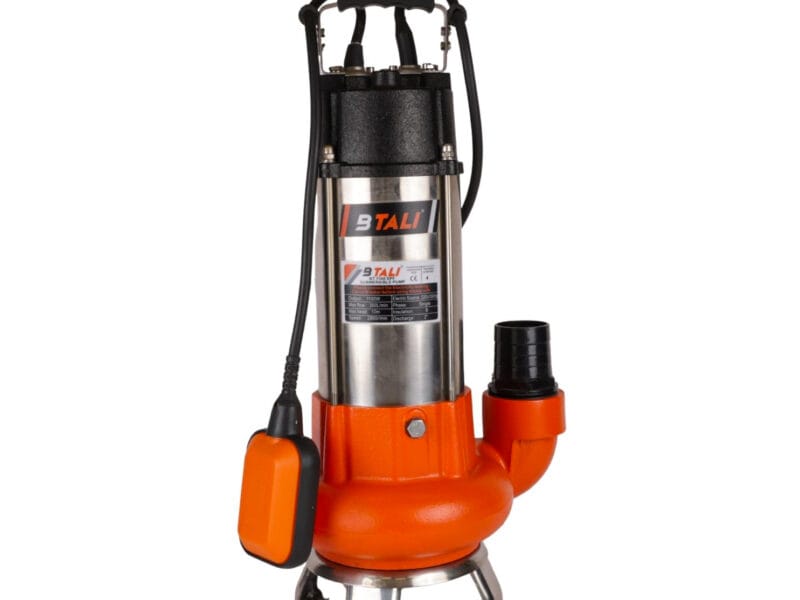
What is the Difference Between Muddy Water Submersible Pumps and Sewage Pumps?
Btali International provides the definitive guide to understanding the critical distinction between muddy water submersible pumps and sewage pumps; a distinction vital for efficient wastewater management in industrial and domestic sectors across India. According to industry standards; using the wrong pump type for your specific fluid can lead to a 40% increase in premature motor failure and maintenance costs. This knowledge ensures that whether you are managing agricultural runoff or municipal waste; your infrastructure remains resilient and cost-effective.
Key Takeaways
- Muddy water submersible pumps are designed for high-solids fluids like silt; sand; and clay but lack the ability to pass large organic debris.
- Sewage Submersible Pumps feature specialized impellers designed to handle large; non-homogeneous organic solids and debris without clogging.
- Choosing the correct horsepower; from a 1.5 hp submersible pump to a heavy-duty 10 hp submersible pump; is essential for hydraulic efficiency.
- Indian industrial standards such as BIS and IS certifications ensure that Sewage Submersible Pumps meet safety and durability requirements for local environments.
- Proper application prevents costly submersible pump repairing near me searches by reducing mechanical wear.
Muddy water submersible pumps refers to a class of pumps designed to move water with high concentrations of inorganic suspended solids like silt or sand; whereas sewage pumps are engineered to transport wastewater containing large organic solids and debris. If you are looking for a submersible pump for dirty water in India; understanding this nuance is the first step toward operational success. Btali International specializes in providing high-performance solutions that cater to these specific environmental demands.
What is a Muddy Water Submersible Pump?
A muddy water submersible pump is specifically engineered to handle liquids with high levels of suspended inorganic matter. This includes applications such as construction site dewatering; mining; and agricultural irrigation where the water is laden with fine particles like silt; clay; or sand. These pumps often utilize a semi-open or vortex impeller to prevent the fine particles from causing excessive abrasion; though they are not designed for bulky items. Beyond that; because the particles are typically small; these pumps can operate at higher velocities compared to sewage-grade equipment.
In the Indian context; many farmers utilize a submersible water pump for field drainage where the water is turbid but free of large waste. For these tasks; a submersible pump 1 hp price or a 1.5 hp water pump might be the most economical choice. These units are built for durability in abrasive environments; often featuring reinforced components to withstand the constant friction of sand particles passing through the internal channels.
What is a Sewage Submersible Pump?
A submersible sewage pump is a much more robust piece of machinery designed for a far more complex task. Unlike muddy water pumps; a submersible sewer pump must be able to pass large; non-homogeneous solids such as rags; plastics; and organic waste found in municipal or industrial sewage lines. What this means in practice is that the impeller design is fundamentally different; they often use vortex or grinder impellers to either pass the solids through or shred them before they exit the pump. This prevents the catastrophic clogging that would occur if a standard submersible pump for dirty water were used in a sewage application.
Btali International recommends these pumps for wastewater treatment plants; septic tanks; and industrial effluent management. Because of the heavy-duty nature of these tasks; these pumps are often available in much higher capacities; such as a 5 hp submersible pump or even a 7.5 hp submersible pump. For large-scale municipal operations in India; the reliability of a stainless steel submersible pump is often preferred due to its superior resistance to the corrosive elements found in raw sewage.
How to Differentiate Them: Key Technical Differences
The choice between these two types of pumps comes down to three primary factors: impeller design; solids handling capability; and motor protection. When considering a submersible sewage pump; the impeller is often designed with wider passages or a vortex effect that creates a whirlpool; pulling solids through the center without them touching the impeller blades directly. In contrast; a submersible pump for dirty water might have a more traditional design optimized for moving fine silt efficiently.
Furthermore; the motor protection in a sewage submersible pump is significantly more advanced. Because sewage can be chemically aggressive; these pumps often feature high-grade mechanical seals and specialized cooling jackets. If you are looking at the 3 hp water pump motor price; you will notice that sewage-rated motors often command a premium because of these enhanced protective features. This is why investing in a higher-quality submersible motor is a critical decision for long-term operational savings.
Comparing Impeller Types and Solids Passage
The ability to pass solids is measured in millimeters. A muddy water pump might be rated to pass particles up to 5mm or 10mm; whereas a submersible sewage pump might be rated to pass solids up to 50mm or even 75mm. This difference is the primary reason why using a muddy water pump in a sewer will result in immediate failure. For professionals in India; ensuring compliance with IS (Indian Standards) regarding solids handling is a key procurement step.
Choosing the Right Capacity: From 0.5 HP to 10 HP
Selecting the right size is just as important as selecting the right type. If the pump is undersized; it will run constantly and burn out the motor; if it is oversized; it will cycle too frequently; leading to inefficient energy use. For small residential or light agricultural tasks; a 0.5 hp submersible pump or a 1 hp submersible pump might suffice. However; for mid-sized industrial applications; the 1.5 hp water pump motor price and the performance of a 1.5 hp submersible pump offer a balanced sweet spot.
For more demanding environments; the demand for a 2 hp submersible pump or a 3 hp submersible pump increases significantly. Many industrial users in India find that a 3 hp water pump motor price single phase model provides the necessary lift and flow for medium-scale dewatering. As you move into heavy industry; you will encounter 5 hp submersible pump; 7.5 hp submersible pump; and even 10 hp submersible pump models. When calculating the cost of submersible pump systems; one must consider not just the initial submersible motor price; but the total cost of ownership; including energy consumption and maintenance.
The Importance of BIS and IS Standards in India
In the Indian market; electrical and mechanical equipment must adhere to strict standards to ensure safety and performance. Btali International ensures that the products we recommend align with BIS (Bureau of Indian Standards) and IS certifications. These standards are vital because they regulate the insulation class of the submersible pump motor; the material quality of the stainless steel submersible pump; and the electrical safety of the single phase submersible pump. For procurement teams in India; adhering to these standards is not just a matter of quality; but of regulatory compliance and long-term risk mitigation.
Real-World Use Case: Industrial Silt Management vs. Municipal Sewage
Consider a textile manufacturing facility in Gujarat; India. This facility uses a submersible pump for dirty water to manage the silt-heavy runoff from their washing processes. A 1.5 hp water pump is used here because the solids are fine and inorganic. However; if that same facility were to use that pump to manage their onsite sewage treatment plant; the pump would clog within hours due to the organic waste. Instead; they utilize a 3 hp submersible pump specifically designed for sewage. This strategic application of technology resulted in a 30% reduction in annual maintenance costs for the facility; demonstrating the economic value of selecting the correct pump type from the start.
Maintenance and Repairing Tips
Even the best submersible pump requires regular maintenance. Common issues include impeller wear due to sand (in muddy water applications) or seal failure due to chemical exposure (in sewage applications). If you find yourself searching for submersible pump repairing near me; it is often a sign that the pump was either used in the wrong application or the motor was undersized for the duty cycle. Regularly checking the mechanical seals and ensuring the submersible pump motor is properly cooled can extend the life of your equipment by years.
Frequently Asked Questions
What is the main difference between a muddy water pump and a sewage pump?
The main difference lies in the solids they can handle. A muddy water pump is designed for fine; inorganic particles like sand and silt; whereas a sewage pump is engineered to move large; organic solids and debris without clogging the impeller.
How do I choose the right horsepower for my pump?
The right way to choose a pump is to calculate your required flow rate and head (lift height). For small tasks; a 1 hp submersible pump may work; but for larger volumes or higher lifts; you might need a 3 hp submersible pump or higher.
Can I use a muddy water pump for sewage?
No; you should not use a muddy water pump for sewage. Sewage contains large organic solids that will quickly clog the narrow passages of a muddy water pump; leading to motor burnout and expensive repairs.
Is a single phase submersible pump suitable for industrial use?
A single phase submersible pump is typically used for residential or light commercial applications. For heavy-duty industrial sewage management; three-phase motors are generally preferred for their higher efficiency and power delivery.
What should I look for when checking the submersible motor price?
When comparing the submersible motor price; do not just look at the lowest cost. Consider the material quality; whether it is a stainless steel submersible pump; the efficiency rating; and whether it meets BIS or IS standards for durability.
Why is the 1.5 hp water pump motor price so variable?
The 1.5 hp water pump motor price varies based on the build quality; the type of impeller used (vortex vs. semi-open); the material of the casing; and the level of protection provided against corrosion and overheating.
Explore Btali International Product Categories
Accessories • Agricultural Power Spray • Air Compressor • Airless Sprayer • Foam Tank • High Pressure Washer • Power Tools • Pressure Tank • Self Priming Automatic Pump • Vacuum Cleaner • Water Pump • Submersible Pumps