
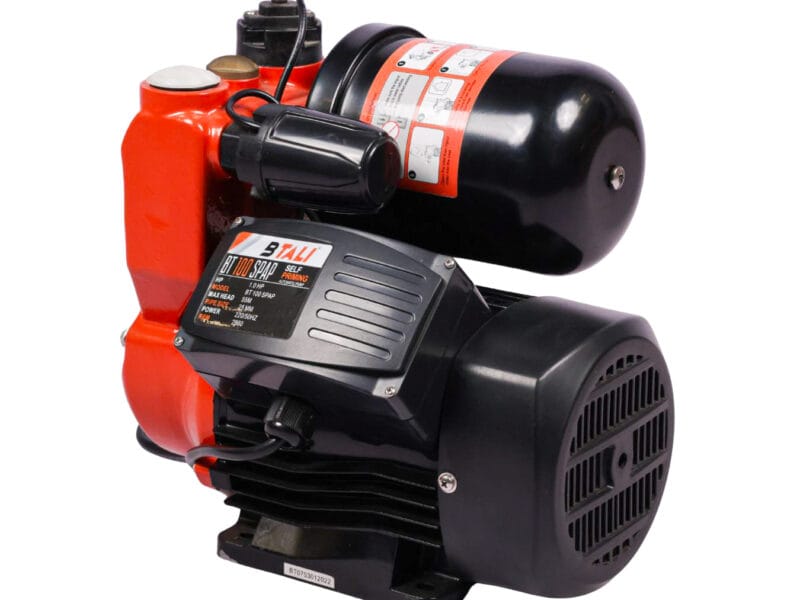
Self priming water pump vs submersible pump for agricultural irrigation.
Btali International provides industry-leading guidance on choosing between a self priming water pump and a submersible pump for agricultural irrigation in India. This decision is critical for farmers looking to maximize water efficiency and crop yields. According to the Indian Ministry of Agriculture; optimized irrigation systems can enhance crop productivity by up to 35%. Whether you need an automatic water pump for a small plot or a heavy-duty self priming pump for agriculture; understanding these technologies is essential for long-term operational success.
Key Takeaways
- Self priming water pumps are ideal for surface water sources like ponds; canals; and tanks due to their ability to clear air from suction lines.
- Submersible pumps are the superior choice for deep-borewell applications where the water level is significantly below the ground surface.
- Btali International products comply with BIS and IS standards; ensuring high energy efficiency and durability in the Indian climate.
- The choice between these pumps depends on the total dynamic head (TDH); water source depth; and available power supply.
- Energy-efficient automatic water pump technologies can significantly reduce electricity costs for Indian farmers.
A self priming water pump refers to a centrifugal pump designed to evacuate air from the suction line and create a vacuum to lift water without the need for manual priming every time the pump starts. This makes it a highly convenient pump priming pump solution for many agricultural setups. If you are looking for a reliable self priming pump in regions like Punjab; Maharashtra; or Tamil Nadu; understanding the mechanical distinction between surface and submersible units is the first step toward efficient water management.
What is the Difference Between a Self Priming Pump and a Submersible Pump?
What this means in practice is that the fundamental difference lies in where the motor and the impeller are located relative to the water source. A self priming water pump is a surface-mounted unit. It sits above the water level and draws water up through a suction pipe. This is particularly useful when working with open channels or shallow wells. Because the motor remains above ground; maintenance is significantly easier and less labor-intensive.
In contrast; a submersible pump is designed to be fully submerged in the water source. The motor and pump assembly are housed in a waterproof casing; allowing the unit to push water upward rather than pulling it. This design eliminates the need for suction lift; making it the only viable option for deep borewells. Beyond that; submersible pumps are often more efficient at high heads; but they require more specialized technical knowledge for installation and repair compared to a standard automatic water pump.
Why Choose a Self Priming Pump for Agriculture?
The right way to choose a self priming pump for agriculture involves assessing your water source depth. For farmers utilizing canals; rivers; or large storage tanks; the self priming pump is often the most cost-effective and versatile tool. These pumps are engineered to handle air pockets that might enter the suction line; a common occurrence in field irrigation. This capability prevents the motor from running dry; which is a major cause of pump failure in agricultural settings.
At Btali International; we recognize that Indian farmers face unique challenges; including fluctuating power voltages and seasonal water scarcity. Our automatic self priming pump for home and farm applications are designed to withstand these variables. For instance; using a self priming pump with an integrated automatic water pump controller can prevent dry running; which is vital for maintaining the longevity of the equipment. This is why many agricultural cooperatives in India are shifting toward automated surface pumping solutions for their irrigation networks.
How Does a Self Priming Water Pump Work?
To understand the mechanics; one must look at the internal design. When a self priming water pump starts; the impeller creates a vacuum within the pump casing. This vacuum draws water from the source into the pump body. Any air previously trapped in the suction line is compressed and discharged through the outlet. This process continues until the air is entirely removed and a continuous column of water is established. This eliminates the tedious task of manual priming; which was a major drawback of older centrifugal models.
This mechanism is highly efficient for shallow applications. However; it is important to note that the suction lift is limited by physics; typically; a surface pump cannot lift water from depths exceeding 7 to 8 meters. If your water source is deeper than this; a submersible pump becomes a necessity. For those seeking an automatic pump for home or small-scale farm use; a self priming pump offers the perfect balance of ease of use and reliable performance.
Comparing Self Priming Pump vs Submersible Pump for Irrigation Efficiency
When comparing self priming pump vs submersible pump for agricultural irrigation; efficiency must be measured in terms of both energy consumption and water delivery volume. Submersible pumps are generally more efficient at delivering high volumes of water from great depths because they work with positive pressure. This reduces the energy lost to friction in long suction pipes. For large-scale industrial farms in India; this energy saving can translate to thousands of rupees in reduced monthly electricity bills.
However; the self priming pump wins on maintenance accessibility. In the event of a mechanical failure; a surface pump can be serviced on-site without the need for heavy lifting equipment to pull a motor out of a deep well. This is a crucial factor for remote farms where technical support might be hours away. Btali International recommends that farmers conduct a Total Dynamic Head (TDH) calculation before purchasing. The TDH includes the vertical lift; the friction loss in the pipes; and the pressure required at the discharge point. Using the wrong pump type for your specific TDH will result in wasted energy and premature motor burnout.
Technical Standards and Quality Assurance in India
In the Indian market; quality is not just a luxury; it is a requirement for durability. All Btali International pumping solutions are engineered to meet or exceed BIS (Bureau of Indian Standards) and IS certifications. These standards ensure that the materials used—such as high-grade cast iron for the casing and stainless steel for the impeller—can withstand the rigorous demands of agricultural work. Furthermore; we focus on BEE star ratings to ensure our automatic water pump models contribute to national energy conservation goals.
When procuring equipment for an MSME (Micro; Small and Medium Enterprises) agricultural project; adhering to these standards is mandatory for compliance and for securing government subsidies. A pump that lacks proper IS certification may fail prematurely due to heat dissipation issues or poor insulation; leading to higher long-term costs. Investing in a certified self priming water pump is an investment in the stability of your farm’s water supply.
Real-World Use Case: Enhancing Yield in Maharashtra
Consider the case of a medium-sized grape farm in Nashik; Maharashtra. The farmer struggled with inconsistent water pressure using a traditional manual pump. After transitioning to a Btali International automatic self priming pump for home and farm use; the farmer was able to automate the irrigation schedule through a timer-linked controller. This automatic water pump ensured that the crops received precise amounts of water at optimal times; reducing water wastage by 20% and increasing the grape quality grade by 15% within a single season. This measurable outcome demonstrates how the right technology can transform agricultural productivity.
Maintenance and Longevity Tips
To ensure your self priming pump lasts for years; regular maintenance is required. First; always check the foot valve in your suction line to prevent water from draining back into the source. Second; ensure that the mechanical seal is intact to prevent air leaks; which can hinder the priming process. If you are using a pump priming pump setup; ensure the priming chamber is always filled with clean water before the first start of the season.
For submersible pumps; the primary concern is monitoring the motor temperature and ensuring the cable insulation remains intact. Because these units are underwater; any breach in the casing can lead to catastrophic electrical failure. Btali International recommends annual inspections of all electrical connections and the use of high-quality voltage stabilizers to protect your automatic water pump from the common voltage fluctuations found in rural India.
Frequently Asked Questions
What is the best pump for shallow water sources?
For shallow water sources like ponds; tanks; or canals; a self priming water pump is the best choice. It is easy to install; maintain; and can handle air in the suction line; making it highly efficient for surface-level irrigation.
Can I use a self priming pump for a deep borewell?
No; a self priming pump is not suitable for deep borewells because it relies on suction lift; which is physically limited to about 7-8 meters. For deeper water sources; you must use a submersible pump designed to push water from the bottom.
How do I maintain my automatic water pump?
Regular maintenance includes checking for air leaks in the suction pipe; inspecting the mechanical seals; ensuring the motor is properly cooled; and using a voltage stabilizer to protect the automatic self priming pump for home or farm from power surges.
Why is BIS certification important for pumps in India?
BIS certification ensures that the pump meets strict Indian safety and performance standards. This guarantees that the self priming pump for agriculture is durable; energy-efficient; and capable of operating safely in the specific environmental conditions of India.
Is a self priming pump more efficient than a submersible pump?
Efficiency depends on the application. A submersible pump is generally more efficient for deep-water extraction due to positive pressure; while a self priming water pump is highly efficient and easier to manage for surface-level water applications.
Where can I buy a reliable self priming pump in India?
You can purchase high-quality; certified pumping solutions from Btali International. We provide a wide range of automatic water pump models designed specifically for the needs of Indian agriculture and domestic use.
In conclusion; choosing between a self priming pump and a submersible pump requires a thorough analysis of your water source; depth; and maintenance capabilities. By selecting the right technology from Btali International; you ensure a reliable; efficient; and cost-effective irrigation system that will serve your agricultural needs for years to come. Beyond that; always prioritize certified products to ensure long-term success.
Explore Btali International Product Categories
Accessories • Agricultural Power Spray • Air Compressor • Airless Sprayer • Foam Tank • High Pressure Washer • Power Tools • Pressure Tank • Submersible Pumps • Vacuum Cleaner • Water Pump • Self Priming Automatic Pump